글

Week 8: NanoTech + Art

이미지
Nanotechnology involves tiny units of measurements, which ultimately create smaller and smaller inventions. This science is done on molecular levels with atomic particles, unable to be seen by the naked eye.  According to Victoria Vesna’s intro to this week’s topic, nanotech “introduces a new area of life beyond what we know, pushing us over the edge into the 21 st  century.” Dr. Gimzewski, a Nano scientist, says that nanotechnology has the “potential to change the world- both in economic and social values.” The combination of art and science has no boundaries and continues to grow into technologies we cannot even imagine or predict.   The Art of Nanotech Nanotech artist named Christian Orfescu’s day job involves an analytical laboratory at Caleb Technology. Orfescu is incredibly passionate about his craft, and about nanotechnology, but he hopes to expand the curiosity behind nanotechnology, considering over 70 percent in the U.S. use products incorporatin...

Week 7: Neuroscience+ Art

이미지
Neuroscience is of course the study of the brain, but many of us often forget about the beauty and the art behind the study of our conscience and how our brain functions. Our brain is the core of our existence, and it's what makes each one of us the beautiful creatures that we are. Everyone’s DNA is different. Color, tone, size, symmetry, fingerprints etc. The brain is similar in this regard. Biologically the human brain is very similar in every person; however, the way they are expressed is extremely different. Some people are left side dominate, while others are right. Some are good at math, while some are better at literature. Some are athletic, some are musical. These all stem from the brain and personality of each individual.  The origin of personality is a combination of the both nature and nurture. Now, artists like Karen Norberg and Margerie Taylor are using their fixation on the human brain to create art from its physical beauty and wonder. These ar...

Event 2

이미지
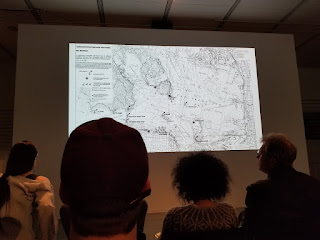
On May 10 th 2018, I went to LEONARDO ART SCIENCE EVENING RENDEZVOUS (LASER) presentation by ARIEL LEVI SIMONS, KELLY NIPPER, JOHN HOOD, and MARU GARCÍA. LASER (Leonardo Art Science Evening Rendezvous) Talks is Leonardo's international program of evening gatherings that bring artists and scientists together for informal presentations and conversations.   This event helped me understand the more about the biotech + art ideas. When Maru Garcia, Design Media Arts MFA Graduate Student, did her presentation, she showed us very weird looking fluorescent object and bacteria genetic DNA colorful art piece. This was relevant to week 6: biotech + art because Eduardo Kac’s GFP bunny was injecting micro genes from fluorescent jellyfish to bunny to make them light under the dark. Eduardo’s idea of making fluorescent bunny is relevant to artistic work because nowadays there are many glow in the dark products. I think those items are very cool and useful because in the dark, with the glow-...

Week 6: BioTech + Art

이미지
After watching videos of the intersections of biotech, med-tech, and robotics with art are all interrelated. Each discipline brings with it creative solutions to old problems, but along with innovation comes the question of ethics. Animal testing is controversial topic and often asked is it okay if it’s to test animals to improve the human condition? The line between necessary and excessive is blurry, but I believe that genetic modification should for the most part be reserved to humans.   The Onco Mouse is a mouse that has been genetically modified to be more susceptible to cancer, making it a better subject for cancer research. The mouse is a genetically significant to human illness research, because their DNA trees are very similar to humans. However, I believe that the ultimate result of a closer cancer simulation is not a significant enough reason to justify the animal suffering. On the other hand, at least we got some results from testing animals so I think that ...

Week 4: MedTech + Art

이미지
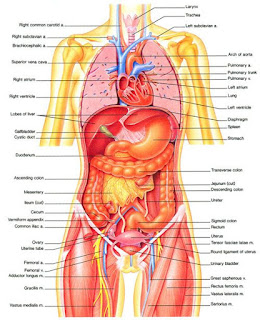
In this week’s topic, we learned about how medicine, technology, and art relate to each other. In the time of renaissance, anatomy and dissection was at the intersection of art and science. People first did human dissection because they wanted to know how the body looks and works. Ancient Greek did human dissection in more a scientific way and going into more scientific method and science coming together. Andreas Vesalius was the first anatomist and physician who is the founder of modern human anatomy who wrote De Humani Corporis Fabrica 1543. In this work, treatment of the disease was to be more rigid and accurate inside and outside. I understand that it is important to know human anatomy and how it works, but still back in the days people being tested to be dissected is very cruel thing to do. However, with his work we learned about human body, so I guess it was small sacrifice for the big. In 1858, Henry Gray published a book called “Anatomy” and it showed how beauty...

Event 1

이미지
On Thursday April 5 th 2018, I went to a lunchtime lecture by renowned sound artist, Bill Fontana Acoustical Visons at Broad Arts room. Since I am an electrical engineering student, I never had an opportunity to go to very North side of the campus and visit the Broad Art room. When I walked in to the room, the classroom was very enormous and majestic, it was like a theater. Because this event was 1PM and my class ended at 12:50PM on the South side of the campus, I was a little late to the event. Since it was first time visiting this building I was having hard time finding the classroom as well. When I walked in very quietly to the room, there were very weird sound tickling my ears. I quickly sat down and was spaced out by imposing sounds. I remember he played us the sound of the under the bridge and car passing by. Every time a car passed by there was sound mixtures of air crossing sound, sound of car’s engine, and some wave of the bridge shaking. When I walk on the street, I...